
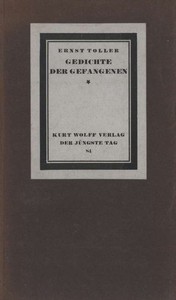
Gedichte der Gefangenen: Ein Sonettenkreis (Nr. 44) by Ernst Toller
Ernst Toller was a playwright, a poet, and a key figure in the short-lived Bavarian Soviet Republic of 1919. When that revolutionary government was overthrown, Toller was arrested, tried for treason, and sentenced to five years in fortress imprisonment. 'Gedichte der Gefangenen' (Poems of the Prisoners) is the sonnet cycle he wrote during those years, specifically Sonnet Cycle No. 44 from his larger body of prison work.
The Story
There's no traditional plot with characters and action. The 'story' is the internal journey of a political prisoner. Through a series of tightly structured 14-line sonnets, Toller maps the landscape of captivity. One poem might stare at the four walls of his cell, finding metaphors for the entire world. Another grapples with the torment of remembering freedom—the taste of rain, the sound of a distant train. He battles crushing loneliness, questions his own ideals, and confronts the fear that his sacrifice and the revolution's failure were for nothing. Yet, intertwined with the darkness are flashes of resilience, solidarity with other unseen prisoners, and a stubborn, fragile hope that ideas cannot be imprisoned forever.
Why You Should Read It
This book hit me in a way I didn't expect. We often learn about historical events from the outside, from the winners or textbooks. Toller gives us the view from inside the jail cell of history. His struggle isn't just about politics; it's deeply human. That fight against despair, the effort to find meaning in suffering, and the clinging to identity when everything is stripped away—it's universal. The sonnet form is fascinating here. It's like he's building a mental cage of strict rhythm and rhyme to contain and control his chaotic emotions. The discipline of the poetry becomes his weapon against the chaos of his situation.
Final Verdict
This is a powerful, compact read for anyone interested in the human spirit under pressure. It's perfect for history buffs who want an emotional, firsthand account of the Weimar era's turmoil, and for poetry lovers who appreciate form used to confront raw feeling. Most of all, it's for readers who believe that words written in confinement can be a profound act of freedom. Don't expect a cheerful read, but do expect one that is haunting, honest, and strangely uplifting in its refusal to be broken.

Emily Garcia
1 year agoPerfect.