
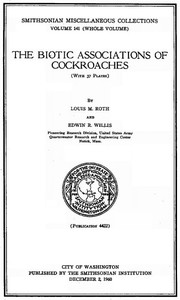
The Biotic Associations of Cockroaches by Louis M. Roth and Edwin R. Willis
Forget everything you think you know about cockroaches. 'The Biotic Associations of Cockroaches' is a deep, methodical look at how these insects fit into the natural world. It's not a story about one roach, but about all the relationships—big and small—that make a cockroach's life possible. The authors, Louis M. Roth and Edwin R. Willis, act as expert guides through a hidden landscape.
The Story
The book has a simple but powerful structure: it shows us who the cockroach lives with. It systematically explores every type of relationship. You'll learn about the mites that hitchhike on their backs like tiny passengers, the nematode worms that live inside them, and the fungi that grow on their bodies. It details how some wasps use roaches as living nurseries for their young, and how other insects prey on them. But it also goes the other way, showing what cockroaches eat—from decaying leaves to the glue on book bindings—and how that affects their environment. It paints a complete picture of the cockroach not as a solitary invader, but as a key player in a vast, interconnected community.
Why You Should Read It
This book changed how I see the natural world. It's easy to dismiss something as a 'pest,' but this work forces you to appreciate the incredible complexity of even the most maligned creature. The level of detail is astounding. Reading about the specific ways a certain protozoan helps a cockroach digest wood, or how a roach's own bacteria can deter predators, feels like uncovering secrets. It's not written like a thrilling novel, but the facts themselves are so strange and compelling that you get pulled in. It turns disgust into curiosity and, eventually, a kind of respect. You'll never look at a dark corner the same way again.
Final Verdict
This is a niche book, but a brilliant one. It's perfect for natural history fans, insect enthusiasts, or anyone with a deep curiosity about ecology. It's also great for science communicators or teachers looking for extreme examples of symbiosis and food webs. It's not a casual bedtime read; it's a focused, academic study. But if you're willing to engage with it, you'll be rewarded with a profound understanding of one of nature's most successful and misunderstood architects. Think of it as the ultimate biography of a species, told through the lives of everyone it knows.


Amanda Jackson
2 months agoGood quality content.