
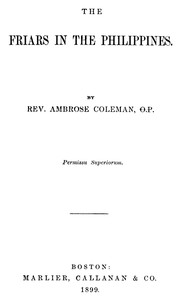
The Friars in the Philippines by Ambrose Coleman
Ambrose Coleman's The Friars in the Philippines is not your typical history lesson. Written in the early 1900s, it looks back at the pivotal, and often controversial, role Spanish friars played during the final century of colonial rule. Coleman, a Catholic priest himself, doesn't shy away from the tough stuff.
The Story
The book sets the stage in the 1800s. The Spanish Empire is weakening, but in the Philippines, the friars (members of religious orders) hold incredible sway. They weren't just priests; they were often the only Spaniards living in rural towns, making them de facto leaders, educators, and landlords. Coleman walks us through how this unique system worked—and how it eventually broke. He details the rising tension between the friars and a new class of educated Filipinos (the ilustrados) who began demanding reforms. The narrative builds toward the explosive Philippine Revolution of 1896, where anger at the friars and their allied government became a primary fuel for the fight for independence.
Why You Should Read It
What makes this book stick with you is its uncomfortable balance. Coleman is clearly writing from within the Catholic tradition, yet he methodically lays out the criticisms against the friars: their resistance to giving up control, their opposition to native priests, and their entanglement in politics. You can feel him wrestling with the gap between religious ideals and the messy reality of power. It's this insider perspective, trying to be fair while acknowledging deep flaws, that gives the history its weight. You won't find easy heroes or villains here, just a compelling study of how good intentions can get twisted inside a system of absolute control.
Final Verdict
This is a must-read for anyone interested in the roots of modern Southeast Asia, or in the complex relationship between religion and colonialism. It's perfect for history buffs who like their narratives filled with real-world conflict and moral ambiguity, not just memorized facts. Be warned: it's a book from another time, so the language can be formal. But push through, and you'll find a story about power, faith, and revolution that feels surprisingly urgent. You'll finish it with a much deeper understanding of why the past is never really past.
Elizabeth Davis
10 months agoThis book was worth my time since the pacing is just right, keeping you engaged. I will read more from this author.
Liam Martinez
5 months agoHonestly, it creates a vivid world that you simply do not want to leave. I learned so much from this.
Ava Robinson
7 months agoIf you enjoy this genre, the plot twists are genuinely surprising. Absolutely essential reading.
Oliver Jones
4 months agoThe formatting on this digital edition is flawless.

James Smith
7 months agoBased on the summary, I decided to read it and the clarity of the writing makes this accessible. Exceeded all my expectations.