
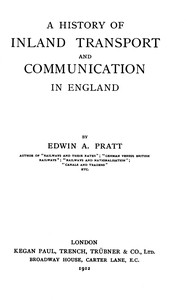
A History of Inland Transport and Communication in England by Edwin A. Pratt
So, what's this book actually about? At its heart, it's the story of how England got moving. Edwin A. Pratt takes us on a journey that starts with the Romans (yes, they built some pretty good roads) and marches right through to the early 20th century. But the real action kicks off in the 1700s. Pratt shows us a country struggling with terrible roads—often just impassable bogs in winter—and how that isolation held everything back.
The Story
The plot, so to speak, follows three revolutionary waves. First came the Canal Mania, a frenzy of digging that created a watery web for heavy goods. Then, the Turnpike Trusts tried to fix the roads, charging tolls to fund improvements. But the star of the show is the railway. Pratt details the cutthroat competition, the engineering marvels (and disasters), and how the 'iron horse' didn't just change travel; it reshaped time, diet, and the very landscape. It's less a list of inventions and more a chain reaction of one big idea forcing the next.
Why You Should Read It
You should read this because it makes you see the ordinary world differently. That canal you cycle past? Pratt explains the political fight to build it. The mainline railway into your city? He recounts the financial panic it caused. His writing is clear and packed with details that stick with you, like how stagecoach travelers often chose to walk up hills to spare the horses, or how early train compartments had no corridors (and no toilets!). He connects the dots between physical movement and social change in a way that feels immediate and personal.
Final Verdict
This book is a perfect match for curious readers who enjoy narrative history or anyone fascinated by how things work—and how they came to be. It's for the local history enthusiast wanting the national context, or the commuter staring out a train window, wondering how this all started. While it's a serious work, it's not an academic slog. Think of it as a well-informed, enthusiastic guide showing you the foundations of modern life, quite literally from the ground up. A truly rewarding read that proves history is all around us, especially under our feet and wheels.




John Rodriguez
1 year agoVery helpful, thanks.