
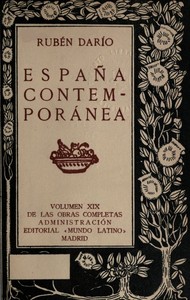
España Contemporánea by Rubén Darío
So, what's this book actually about? It's not a novel with a plot. Think of it as a series of vivid snapshots and deep thoughts. Rubén Darío, a Nicaraguan poet who was a superstar in the Spanish-speaking literary world, traveled to Spain in the late 1890s and early 1900s. 'España Contemporánea' is his collected writings from that trip. He wanders through Madrid, meets famous writers and artists, goes to bullfights, and observes everyday life. But he's not just a tourist. He's trying to diagnose the health of the mother country of the Spanish language.
The Story
There's no traditional story arc. Instead, Darío paints a portrait. He writes about the energy of Madrid's streets, the passion of its people, and the weight of its incredible history. He describes his conversations with literary giants of the day. But a dark thread runs through it all. He keeps noticing the political problems, the poverty, and a feeling that Spain is living in the shadow of its former empire. The 'story' is his own journey from wide-eyed admirer to concerned critic. It's the narrative of a love letter that has to point out some hard truths.
Why You Should Read It
You should read this because it's history written with a poet's heart. Textbooks tell you about events; Darío makes you feel the atmosphere. His descriptions are so sharp you can almost smell the cafés and hear the crowds. I was completely drawn into his personal conflict—his deep love for Spanish culture clashing with his disappointment in its modern struggles. It's a powerful look at national identity from an outsider who is also an insider. He's not a Spaniard, but the Spanish language is his home, which gives him a unique and poignant perspective. It’s less about judging and more about aching for what could be.
Final Verdict
This book is perfect for anyone who loves literary travel writing, poetic non-fiction, or wants to understand Spain's complex soul at a turning point in history. If you enjoy authors like Orwell or Theroux who blend observation with sharp cultural commentary, you'll find a fascinating, earlier version of that here. It's not a light, breezy read—it demands your attention—but the reward is a stunningly beautiful and thoughtful portrait of a nation. Give it a go if you're curious about the man behind the Modernismo literary movement and want to see a country through the eyes of a worried fan.






Lisa Harris
1 year agoThis book was worth my time since the pacing is just right, keeping you engaged. This story will stay with me.